The Impact of the Therapeutic Context

Speech therapy for stuttering can aim for different goals and lead the client in fundamentally different directions — one toward concealment, the other toward authenticity.
Fluency-Focused Approaches — Stuck in old ways
In traditional fluency-focused approaches, the person who stutters is taught to conceal stuttering using “speech tools” – techniques like slowing down, gently bringing the vocal folds together, and carefully coordinating the articulators.
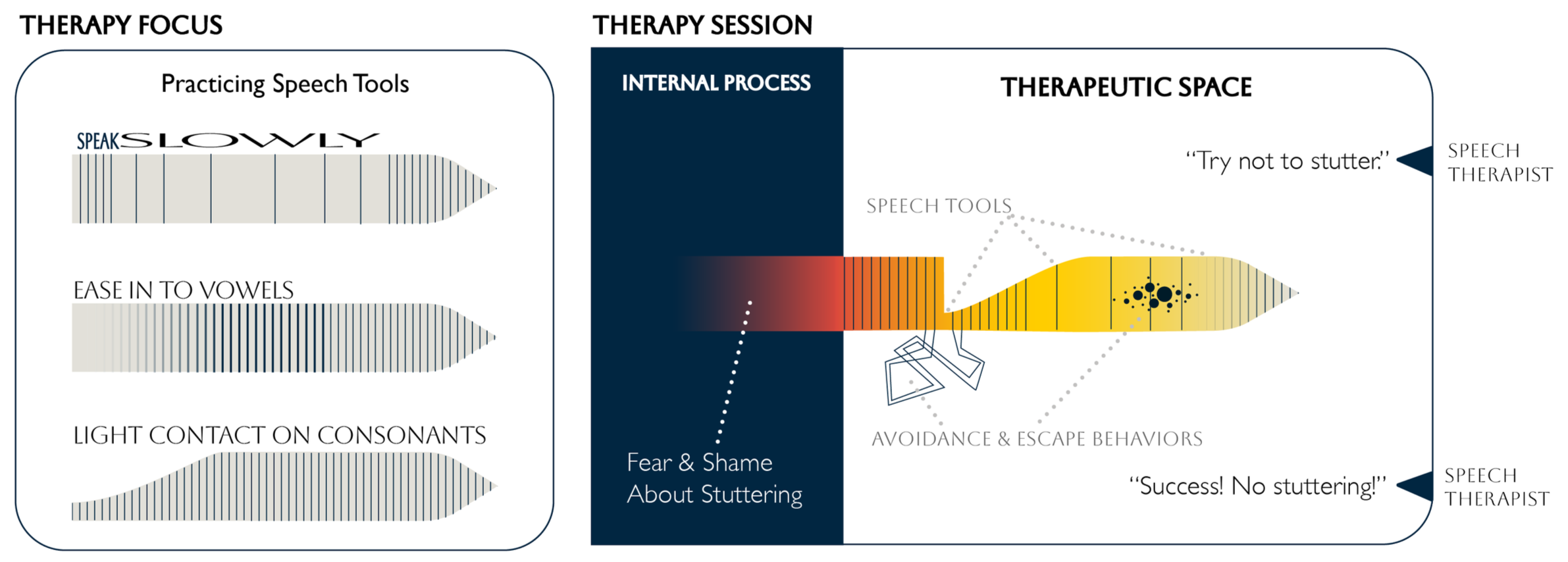
The goal of these tools is to make speech sound smooth to listeners, without addressing deeply engrained avoidance and escape behaviors. Outside the therapy room, these speech tools can be incredibly difficult to maintain. The effort required can make speakers sound and feel robotic, and it also pulls their attention away from the person they’re talking to. Beneath the surface, these tools come at a deeper cost: by treating stuttering as something that should be hidden, they tend to reinforce fear and shame about stuttering rather than relieving it.
Avoidance Reduction Therapy for Stuttering
In our lab, we study a contemporary stutter-affirming approach known as Avoidance Reduction Therapy for Stuttering (ARTS®). In ARTS, people who stutter build confidence, self-acceptance, and genuine connection with others by showing up authentically as stutterers.
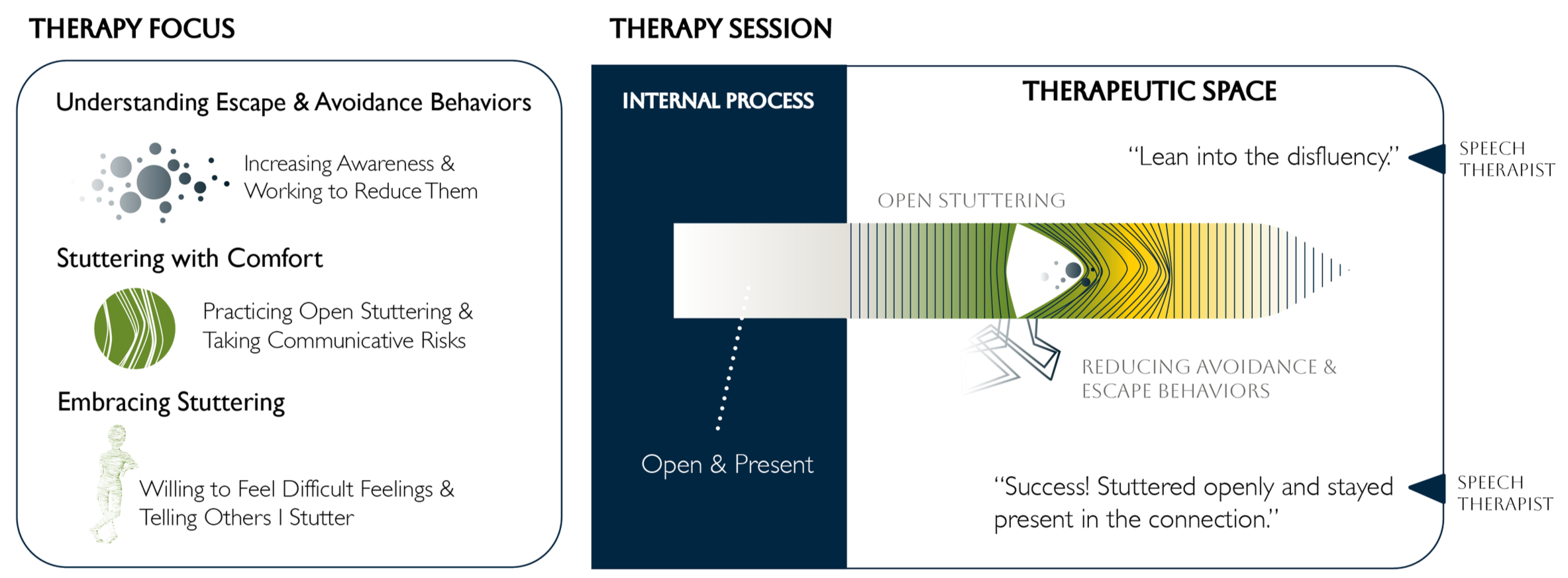
Through ARTS, people unlearn conditioned escape and avoidance behaviors in order to reduce struggle and stutter openly, while simultaneously showing up as a person who stutters. And because the fluent world can be an impatient place for people who stutter, speakers on a stutter-affirming journey often learn how to self-advocate — asking for what they need, helping the people in their life understand how to show up for them, and finding community with others who get it.
This is a sentence or two about the new wave of therapeutics for stuttering.