
Putting Stuttering
in Context

Stuttering is a deeply human, layered experience rooted in neurobiology, learning, identity, and the social world. In our lab, we study the nature of these constructs, how they interconnect, and how they are influenced by the varied contexts a stutterer navigates.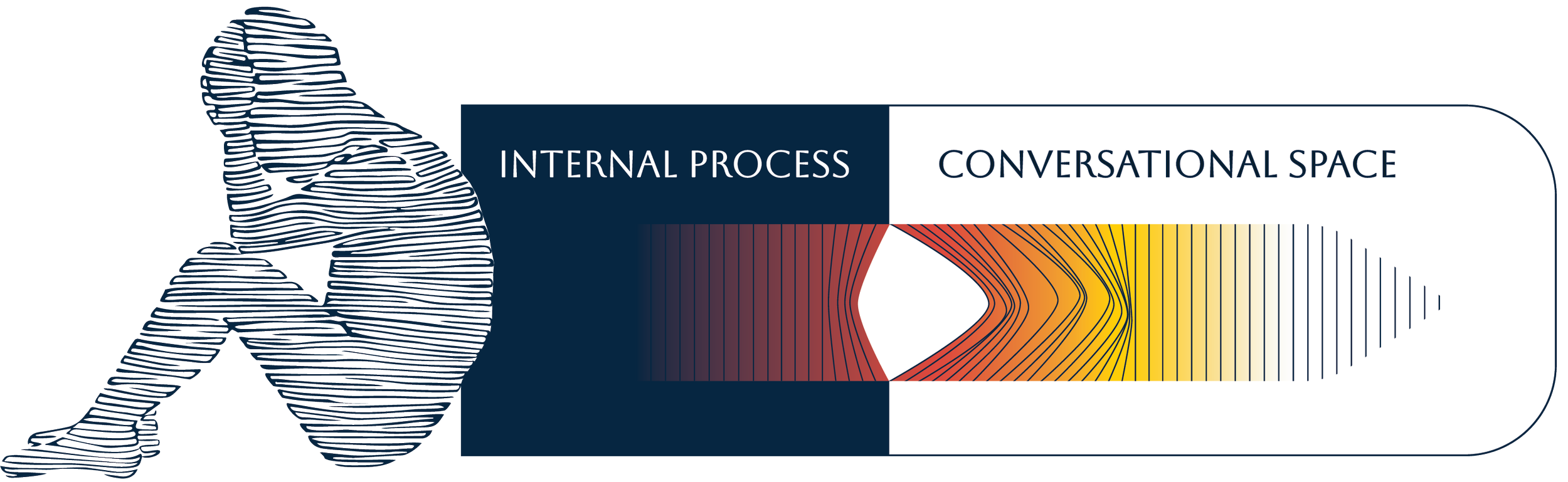
A Moment of Stuttering
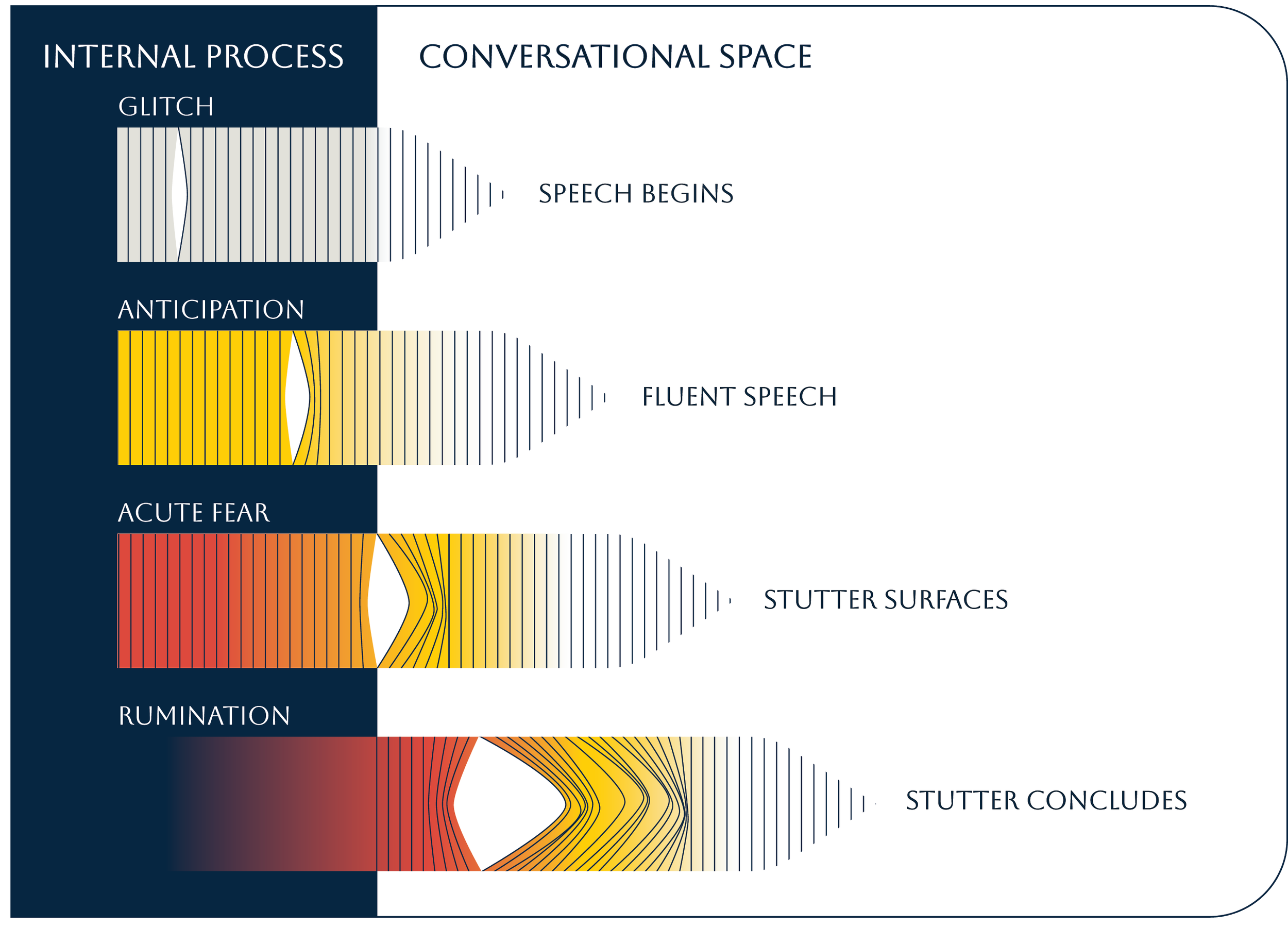
When a moment of stuttering begins, it ripples through the speaker’s inner world before making it through the conversational space to the listener’s ears. In the span of milliseconds, a small glitch in a stutterer’s brain can cascade into anticipation, fear, and rumination — even long after the moment has passed.
When we speak, the brain quickly turns ideas into planned words, those planned words into motor plans, and those motor plans into mouth movements. For people who stutter, there can be a disruption or “glitch” in how the motor plan is made.
When the speaker senses the glitch, they anticipate that they will stutter on an upcoming word. For many people who stutter, this anticipation triggers acute fear — fear of losing control, fear of physically struggling, fear of the listener judging them. The moment of stuttering can be so fearful for some speakers that they experience dissociation, which is when the mind detaches from the body, as if it’s watching the interaction from a distance. Time itself can feel distorted, either grinding to a halt or rushing past in a blur.
Afterwards, the person who stutters may ruminate about how hard the interaction was, replaying the moment long after it’s over. This internal process can interfere with the person’s ability to stay present in their body, in the conversation, in the social connection.
No moment of stuttering unfolds in isolation. How a speaker experiences that cascade (glitch ➔ anticipation ➔ fear ➔ rumination) is shaped by many layers of context all at once: the listener in front of them, the behavioral patterns that have built up over years, and the therapeutic journey they may be on.
Explore how each of these contexts shapes the moment and the person within it.



Getting Unstuck: Moving Toward Open Stuttering
When a moment of stuttering unfolds, it can trace a different path. The speaker can move through moments of stuttering with awareness, acceptance, and presence rather than fear and retreat.
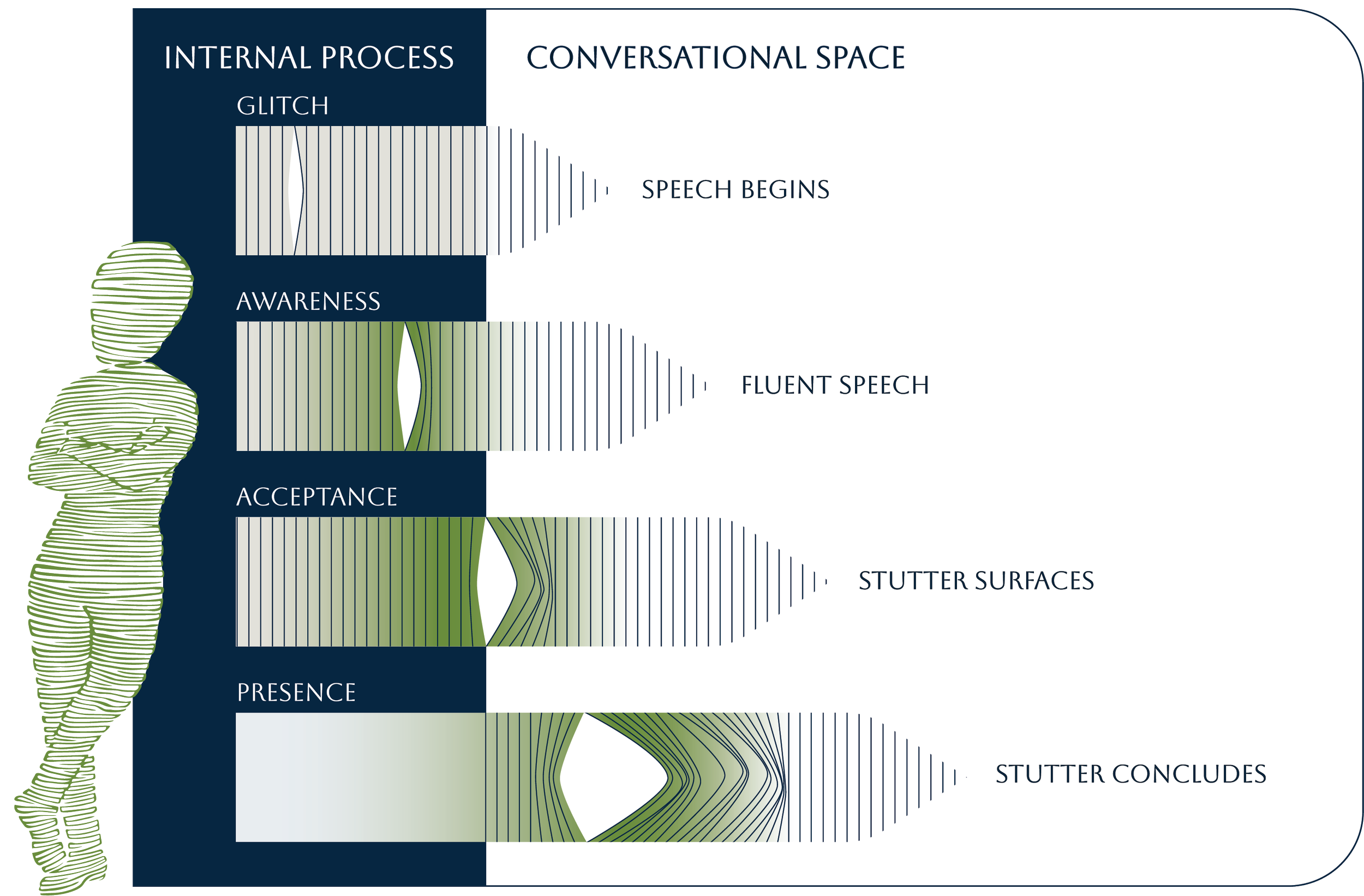
Rather than bracing for an oncoming stutter, a speaker can be aware of the familiar feeling of an approaching disfluency, and meet it with acceptance and curiosity instead of alarm. The speaker can embrace the moment of disfluency without struggling, hiding, or rushing away from it. As the stutter passes through, the person who stutters remains present in their body, in the conversation, in the social connection.
This shift from fear and retreat to acceptance and presence is at the heart of what we hope to support. When approached with curiosity and openness, a moment of stuttering can invite the speaker to show up fully as themselves: saying exactly what they want to say in conversations, pursuing relationships and opportunities that are important to them, and authentically connecting with others.