The Behavioral Patterns that Keep Stutters Sticky

Difficult moments of stuttering and ensuing negative listener reactions can spur deeply-engrained cycles of escape and avoidance behaviors that are used to circumvent the distress of stuttering, both in the moment and long-term.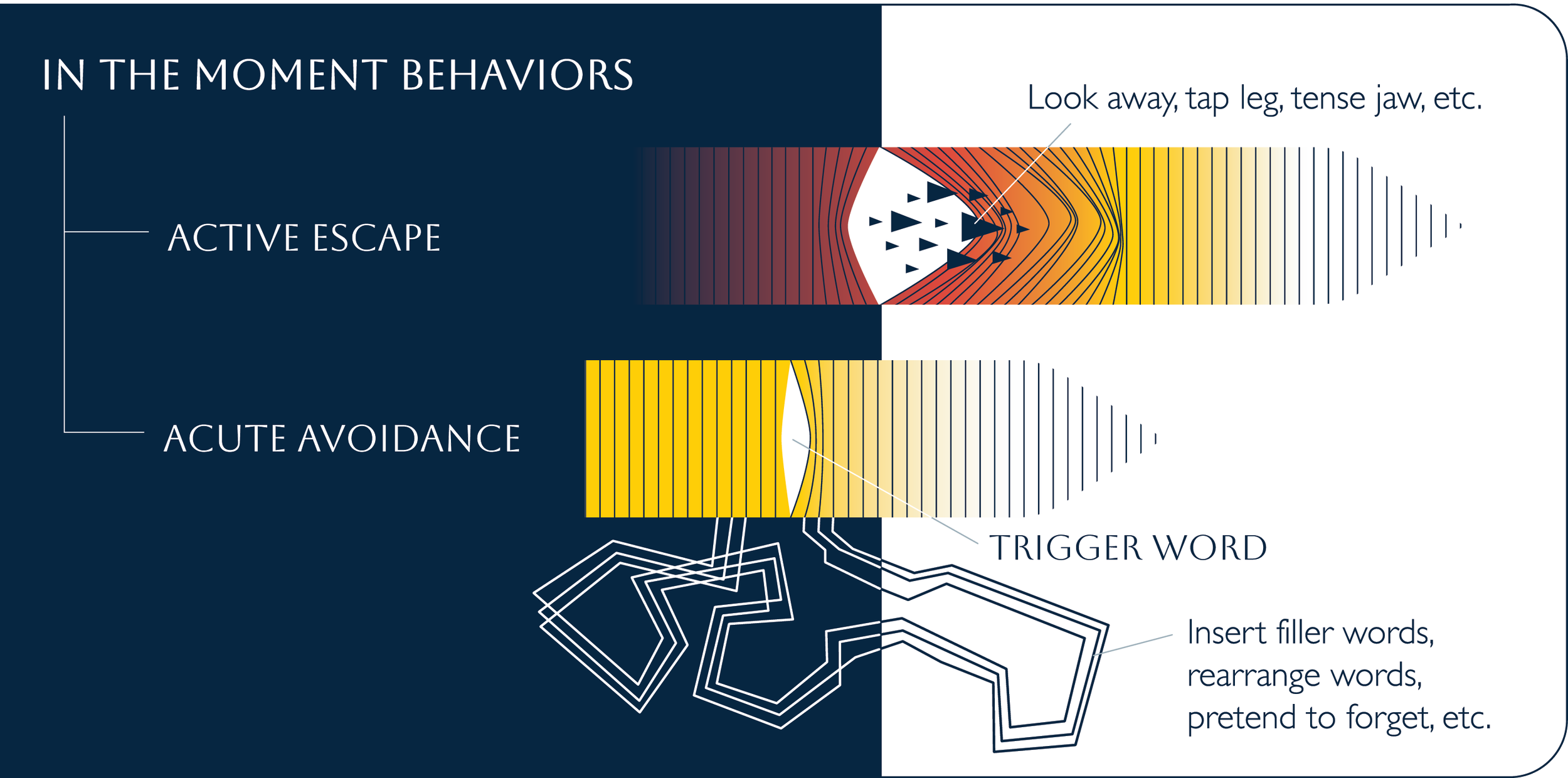
Momentary Tricks
During a moment of stuttering, the speaker might use escape behaviors to try to get out of the stutter as quickly as possible, things like pushing through the sound with extra physical tension, looking away, closing their eyes, tapping their leg, or abandoning sentences mid-thought.
In anticipation of an impending stutter, the speaker may use avoidance behaviors like substituting a word that feels easier to say, talking around a trigger word, stalling by using “uh” or “like” to let the glitch pass, or pretending to forget the word they want to say.
In the short term, momentary tricks like these can bring relief because they help the speaker bypass the rawness of stuttering. But each time the speaker escapes or avoids a moment of stuttering, it sends a message to the brain that stuttering is something to be feared, making the fear stronger over time.
Long-Term Patterns
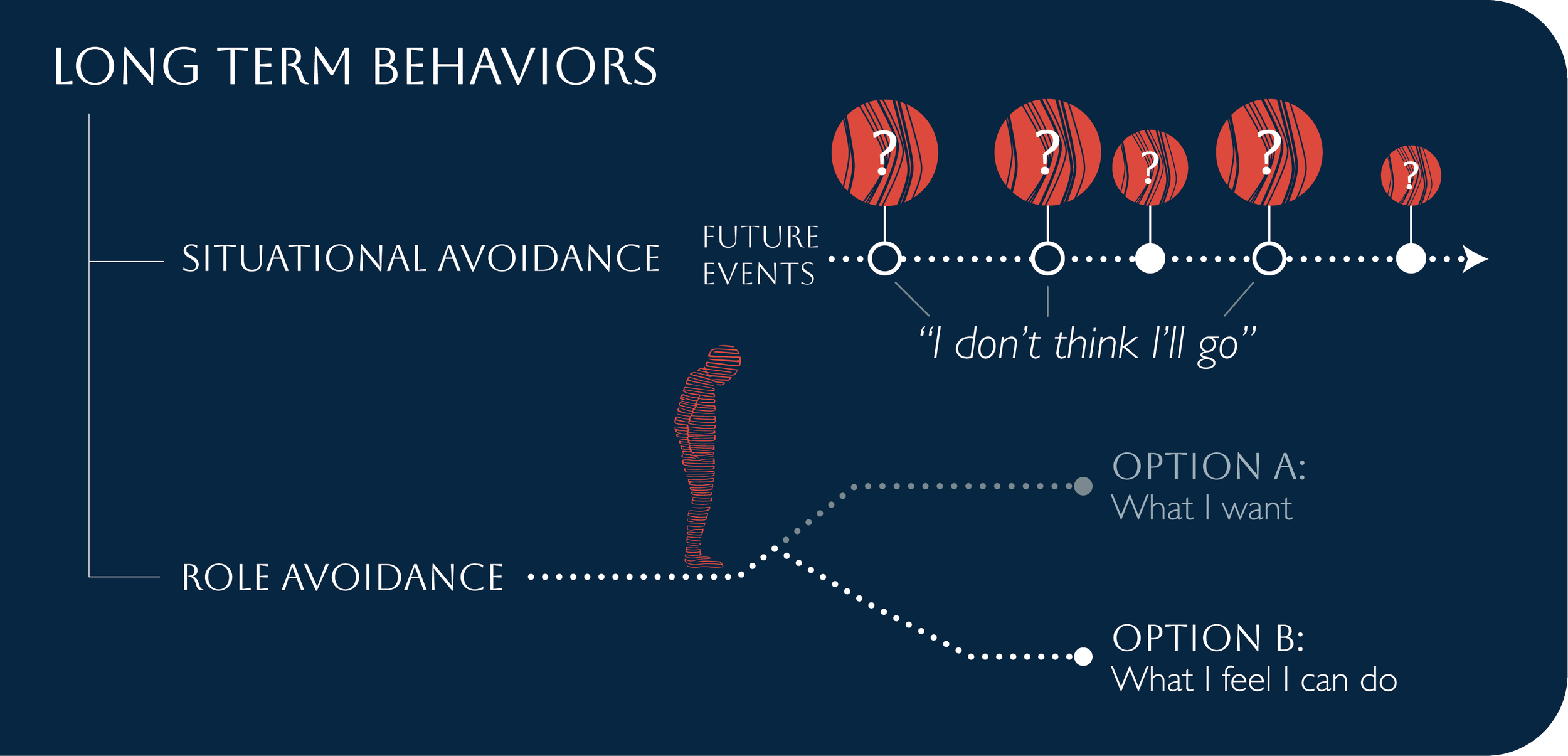
Anticipation isn’t confined to a singular moment in running speech. People who stutter can also experience looming anticipation where they think they’ll stutter in future situations. This can lead to situational avoidance, where the speaker steers clear of entire speaking situations, like leaving the room when people start introducing themselves, emailing someone instead of calling, or skipping social events altogether.
They may also engage in role avoidance, trying to pass as a fluent speaker instead of showing up authentically as a person who stutters. They may quietly settle for relationships, careers, and identities that feel safer than pursuing what they truly want, because years of shame and self-doubt have narrowed their sense of what they believe they are worthy of.
Like momentary escape and avoidance, patterns of longer-term avoidance keep the fear of stuttering alive; the situations and roles that were never faced never feel safe.
Mitigating escape and avoidance behaviors, both in the moment and over time, is at the core of supporting people who stutter in building a life that is no longer organized around fear.